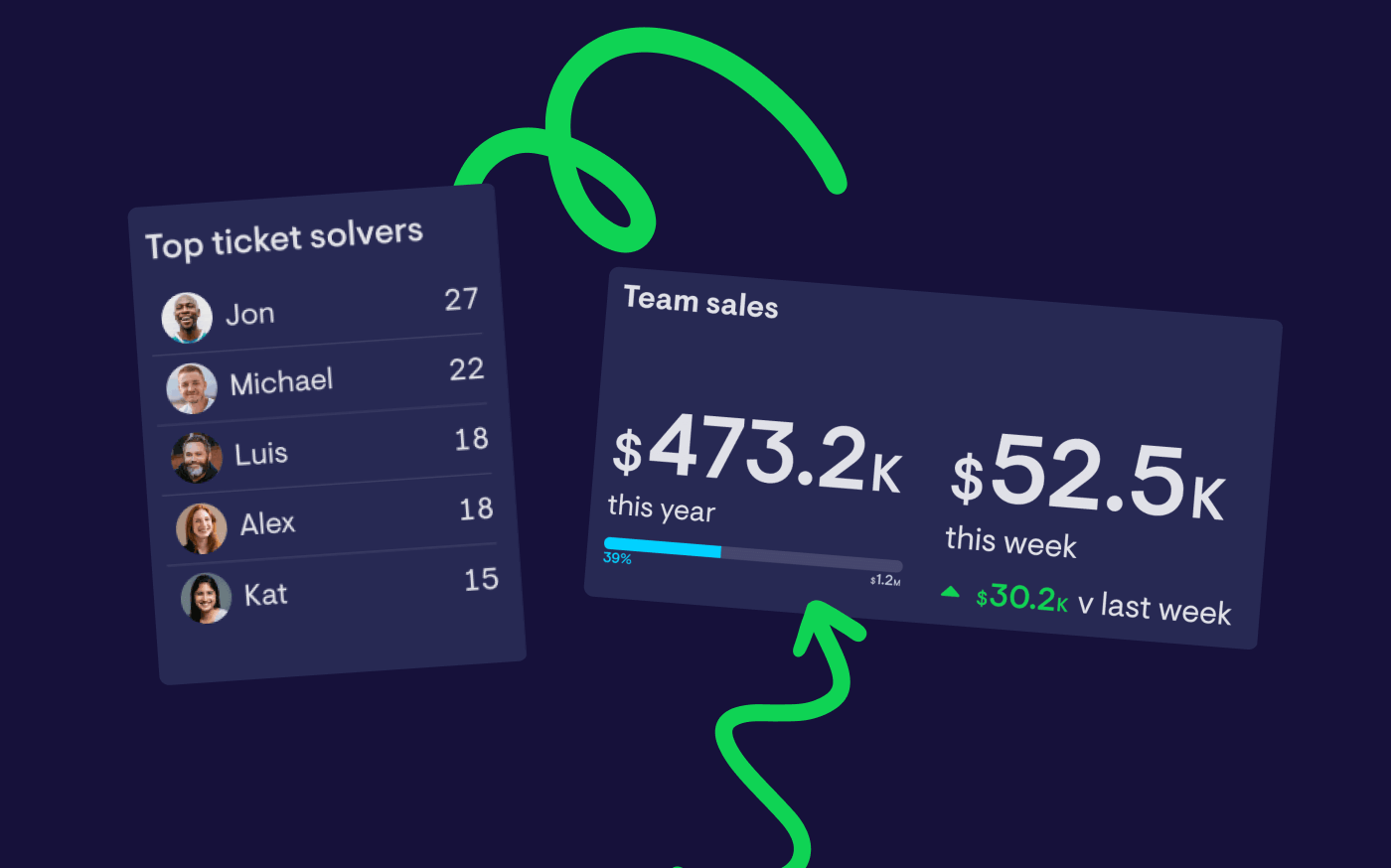
Gamification is the practice of adding game-like mechanics such as points, badges, leaderboards and rewards to non-game activities in the attempt to influence behaviour.
The term took off in the early 2010s when websites and apps started using the idea to drive engagement. Stack Overflow is a well-known example: simple gamification mechanics like upvotes and reputation scores helped steer behaviour and improve contribution quality. It wasn’t just “fun graphics” - it was a system.
Then gamification moved into workplaces. The same idea, applied to support teams, sales teams, call centres, and ops teams.
While it’s past its peak as a buzzword, it’s still a useful tool for measuring and improving team performance.
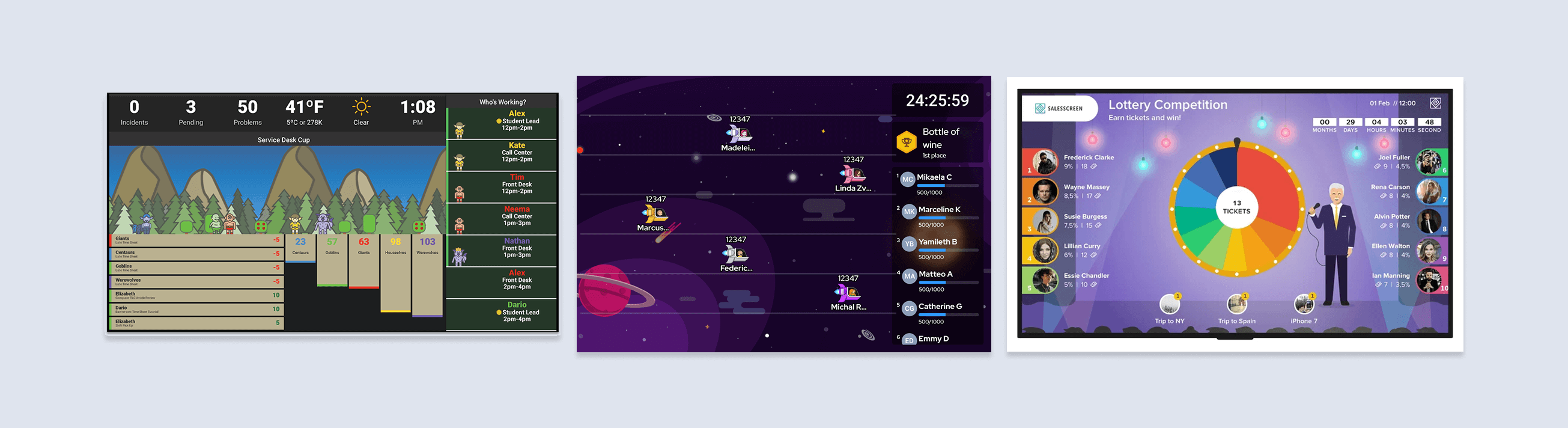
But most “gamification software” in the market focuses on the wrong parts - gimmicks like:
- racing spaceships
- bounties
- cartoon rewards
We’ve found that in experienced customer support, customer service, sales and call center teams, gamification works best when it’s built on live KPIs, not gimmicks.
What actually changes behaviour: the feedback loop
What actually changes behaviour is a feedback loop that’s as close to instantaneous as you can make it.
You do something → the numbers move → you feel the effect.
That “rush” matters. If the loop is fast enough, people adjust their behaviour because the system makes cause-and-effect obvious. It connects them to the outcome of their work.
If the loop is slow (daily reports, weekly spreadsheets, end-of-month reviews), gamification turns into theatre. You’re handing out points for work that already happened.
That’s why customer support gamification and sales gamification work best when the metrics update within minutes, ideally live.
Gamification in the workplace: carrot, stick, and culture
Gamification is usually sold as a carrot: rewards, dopamine, motivation.
But in reality, there’s always a stick too: targets, SLA, pipeline, queue, quotas, accountability. Good systems don’t pretend the stick isn’t there - they make it fair and visible.
And culture decides whether this helps or backfires.
- If dashboards or leaderboards are used to punish people, you’ll get avoidance, stress and sometimes even some gaming of the system.
- If they’re used for learning and encouragement, you’ll get ownership and improvement.
The tool can’t fix culture. But it can either support a healthy loop, or amplify a bad one.
And it’s worth being explicit: if people don’t trust the data, the loop breaks. If the metric can be gamed, people will game it. If it updates slowly, people ignore it.
The stick becomes unfair when visibility is uneven (i.e when some people can see the numbers, others can’t), or when the numbers lag. Real-time visibility transforms accountability from being a retrospective judgement into a shared, ongoing problem a sales or customer service team can act on.
Gamification best practices: what “grown-up gamification” looks like
In practice, mature, effective gamification looks like:
- Metrics that actually map to outcomes (not vanity points). And they need to be tailored to your team's KPIs, not just an approximation.
- Fast updates (ideally live or near real-time).
- Shared visibility (teams seeing the same truth at the same time).
- A place the team actually looks. TV dashboards / wallboards work well for this.
- Sales leaderboards or support team leaderboards that reflect real work and can’t be gamed.
This is why at Geckoboard we focus on the speed and clarity of the data, not gimmicks.
Where Geckoboard fits (and why people use it for gamification)
If you’re searching for a gamification tool for Zendesk support teams or HubSpot / Salesforce sales teams, you don’t really need a game. What you’re really choosing is a feedback-loop tool.
You need a system that:
- pulls KPIs from the tools you already run the business on
- keeps them fresh
- makes them visible to the team throughout the day
- and helps the team connect actions to outcomes quickly
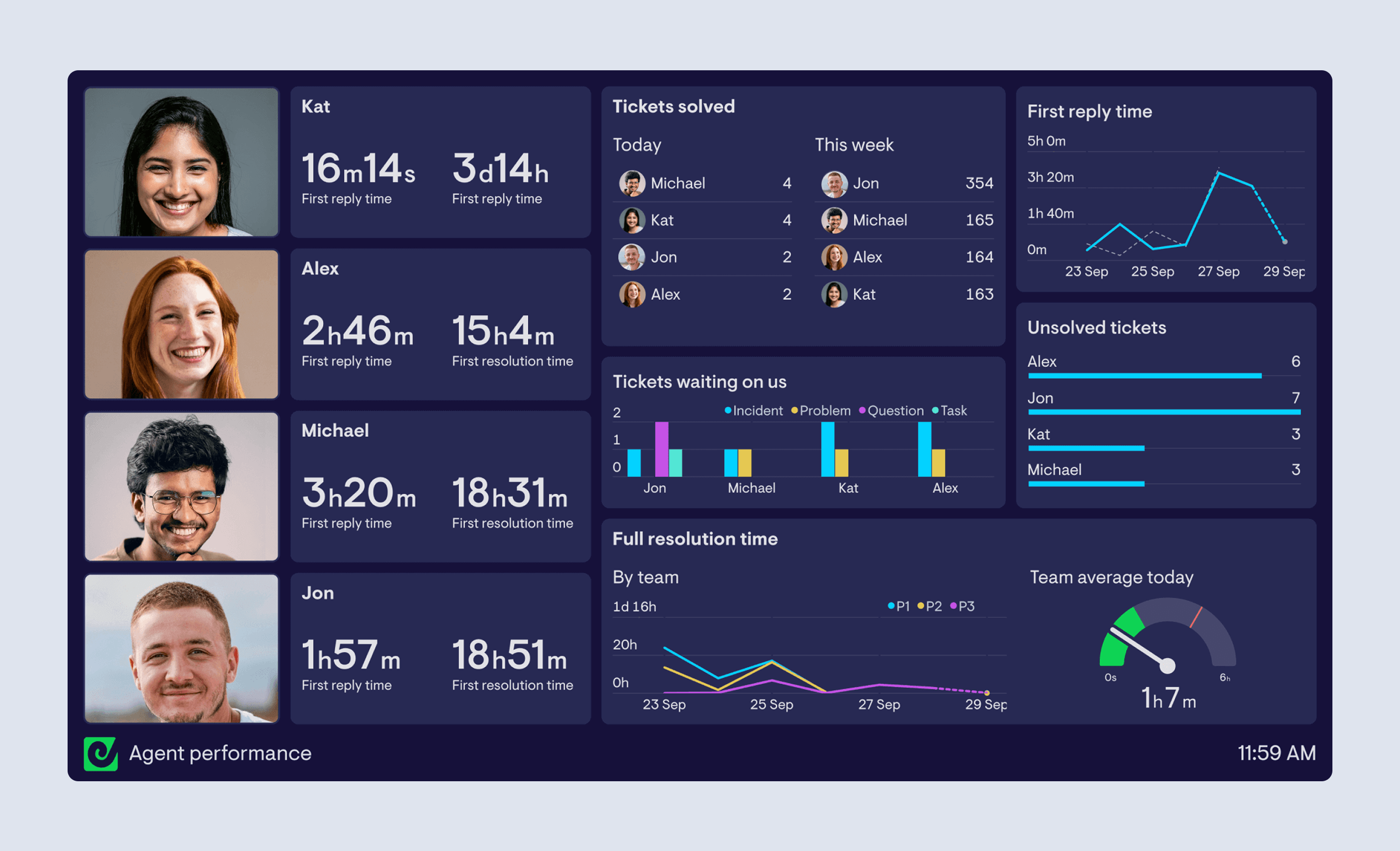
That’s what Geckoboard is for: real-time TV dashboards (some teams call them wallboards) that create tight feedback loops.
Geckoboard is commonly used to make performance visible from:
- Zendesk (with data like ticket queues, SLAs, first reply time, CSAT, and support team leaderboards)
- Salesforce (pipeline, activity leaderboards, stage movement, attainment)
- HubSpot (deals, calls, meetings booked, lifecycle stages)
- Aircall (calls, wait time, missed calls, agent activity)
- Spreadsheets (Google Sheets / Excel) for when KPIs live outside the main systems
If you want something that immediately says “gamification”, you can show leaderboards and targets based on real numbers. But the real benefit is the loop: the data moves fast enough, and is visible enough, that people care.
And because it’s on a shared screen (or multiple screens around the office), it becomes part of how the team runs - not just another report someone forgets to open.

If your team is remote, you don’t have to compromise. Desktop versions of a dashboard are just as effective, and live notifications sent to Slack or Microsoft Teams do the job of alerting everyone to changes in KPIs.
The same loop that motivates people also catches problems earlier.
 Sam Gane
A gamification case study using Geckoboard with HubSpot data.
How to gamify support and sales teams (without making it weird)
This is the bit most teams miss. The mechanics matter far less than the setup.
- Use a mix of outcomes and inputs. Outcomes keep you honest (e.g. SLA, pipeline, revenue). Inputs give people levers they can pull (e.g. replies sent, calls made, meetings booked).
- Make targets explicit. Not just “up is good”. Define ranges, thresholds, and what “good” looks like for today, this week, and this month.
- Put it where people already are. TV dashboards for in-office teams. Slack / Teams for remote teams. If it’s not in the flow of work, it won’t stick.
- Review it in a cadence. Shift handover, standup, end-of-day. The dashboard is the shared truth; the habit is the system.
- Keep it fair. Don’t compare people doing different work. Segment by team, queue, region, or role so you don’t punish complexity.
- Avoid incentives that encourage the wrong behaviour. If quality matters, show it. If cherry-picking deals or tickets is a risk, measure it.
Why gamification fails: the simplest test
If you’re evaluating gamification tools for support or sales, ask one question:
How quickly can someone change behaviour and see the impact?
If the answer is “tomorrow” or “next week”, it’s not a loop. It’s reporting with stickers on it. If the answer is “within a few minutes”, you’re getting into the territory where habits actually change.
That’s the difference.
FAQ
What is gamification in support teams?
Gamification in support teams means using leaderboards, targets, or rewards to influence behaviour - often based on metrics like tickets solved, SLA risk, first reply time, or CSAT. It works best when the underlying metrics update within minutes and are visible to the whole team via a live dashboard or wallboard.
What is gamification in sales teams?
Gamification in sales teams often uses leaderboards and targets based on activity or outcomes (calls, meetings booked, pipeline created, deals won). It tends to work better when reps can see progress throughout the day, not just in weekly reporting.
Often you’ll have leaderboards for who’s “winning” today as well as this week and this quarter. And it’s not just quota - inputs can be gamified too (activities, meetings booked, pipeline added).
A simple “stick” example is a leaderboard for who has the most stale deals.
Does gamification work in sales?
Yes, when it’s tied to real outcomes and updated frequently enough to create a feedback loop. Sales gamification fails when it rewards shallow activity (spammy calls/emails) without quality guardrails like connects, meetings held, pipeline quality, or close rates.
What’s the best tool to gamify support and sales?
The best tool is the one that creates the fastest, clearest feedback loop from your systems of record (Zendesk, Salesforce, HubSpot, Aircall, or spreadsheets) into dashboards the team actually sees and uses daily. The goal isn’t a “game” - it’s speed, clarity, and shared visibility.
Can Geckoboard be used for gamification?
Yes. Teams use Geckoboard dashboards to run targets and leaderboards from tools like Zendesk, Salesforce, HubSpot, Aircall, and spreadsheets. The bigger impact is the real-time feedback loop: actions change, numbers move, behaviour follows.
How do you gamify Zendesk support?
Use real Zendesk metrics (SLA risk, backlog ageing, first reply time, solved, CSAT) and make them visible on a wallboard or shared dashboard that updates within minutes. Pair outcomes with inputs (touches, replies, acceptance) and review it in the team’s cadence (standup, shift handover).
How do you gamify sales in HubSpot or Salesforce?
Use HubSpot or Salesforce data to show live progress against targets (pipeline added, meetings booked, stage movement, closed-won). Pair outcomes with inputs (calls, connects, follow-ups) so reps have levers they can pull during the day, and make sure the dashboard updates within minutes.
What are good gamification metrics for customer support?
Use a mix of outcomes and inputs. Outcomes: SLA risk, backlog ageing, first reply time, CSAT, reopens. Inputs: replies sent, touches, assignment acceptance, time-in-status. The key is balance (so it can’t be easily gamed) and speed (so the loop feels real).
Is a spreadsheet enough for gamification?
Usually not. Spreadsheets tend to be manual and slow to update, which weakens the feedback loop. You can automate some spreadsheet data, but if the numbers don’t feel live, and aren’t placed where the team sees them (on an office TV or Slack/Teams) - motivation fades and it becomes admin.
Why does gamification fail in support and sales teams?
Gamification usually fails when feedback is slow, metrics can be gamed, or visibility is uneven. Points and rewards applied after the work is done don’t change behaviour - they just score it. Without real-time visibility into meaningful KPIs, teams can’t connect actions to outcomes, and motivation quickly fades.

