
Ask any sales leader whether marketing leads are any good (and I’ve had a lot of those conversations), then ask marketing whether sales follows up quickly enough. You will get two very different answers - and both teams will be right.
According to HubSpot's 2024 State of Sales Report, sales professionals at aligned companies are 103% more likely to beat their goals than those at misaligned ones. Yet only 30% of sales professionals say their teams are strongly aligned.
Sales and marketing misalignment is not a strategy problem, it is a visibility problem, and incredibly common. Both teams are doing their jobs. They just cannot see what the other is doing, or whether it is working.
Different teams, different numbers
Marketing tracks leads generated amongst other things, whereas sales leaders tend to tracks pipeline and closed revenue. Each set of numbers is accurate, but neither tells the full story. When the two teams never see them together, they optimise for their own targets rather than a shared outcome.
The misalignment builds gradually. Separate reporting cycles, different tools, and weekly summaries that are already out of date by the time they land. By the time a problem surfaces in a report, it has usually been building for weeks.
What alignment actually requires
Alignment is not a planning day or a new SLA document, which is generally shelfware anyway. It is an operational state that depends on three things.
First, shared definitions. Sales and marketing need to agree on what a qualified lead looks like - with specific criteria both teams have signed off on. Without that, marketing reports on volume while sales ignores the queue.
Second, connected data. Your CRM and marketing automation platform need to pass data to each other transparently, and both teams need to see it. Pipeline analytics should not live in a spreadsheet someone updates on Fridays.
Third, continuous visibility. Both teams need to see the same numbers, updated in real time, so they can act on changes in minutes and hours, rather days or even weeks - that was acceptable in 2024, but not any more.
What real-time visibility changes
When performance data lives in a shared, live view, the conversation between sales and marketing changes. Instead of debating whose numbers are right, teams discuss what to do about them.
Marketing sees when pipeline is thinning and responds before it becomes a problem. Sales sees which lead sources are converting and gives marketing better signal on where to focus. Leaders get immediate clarity on what is happening across the full funnel - without waiting for someone to compile it by hand.
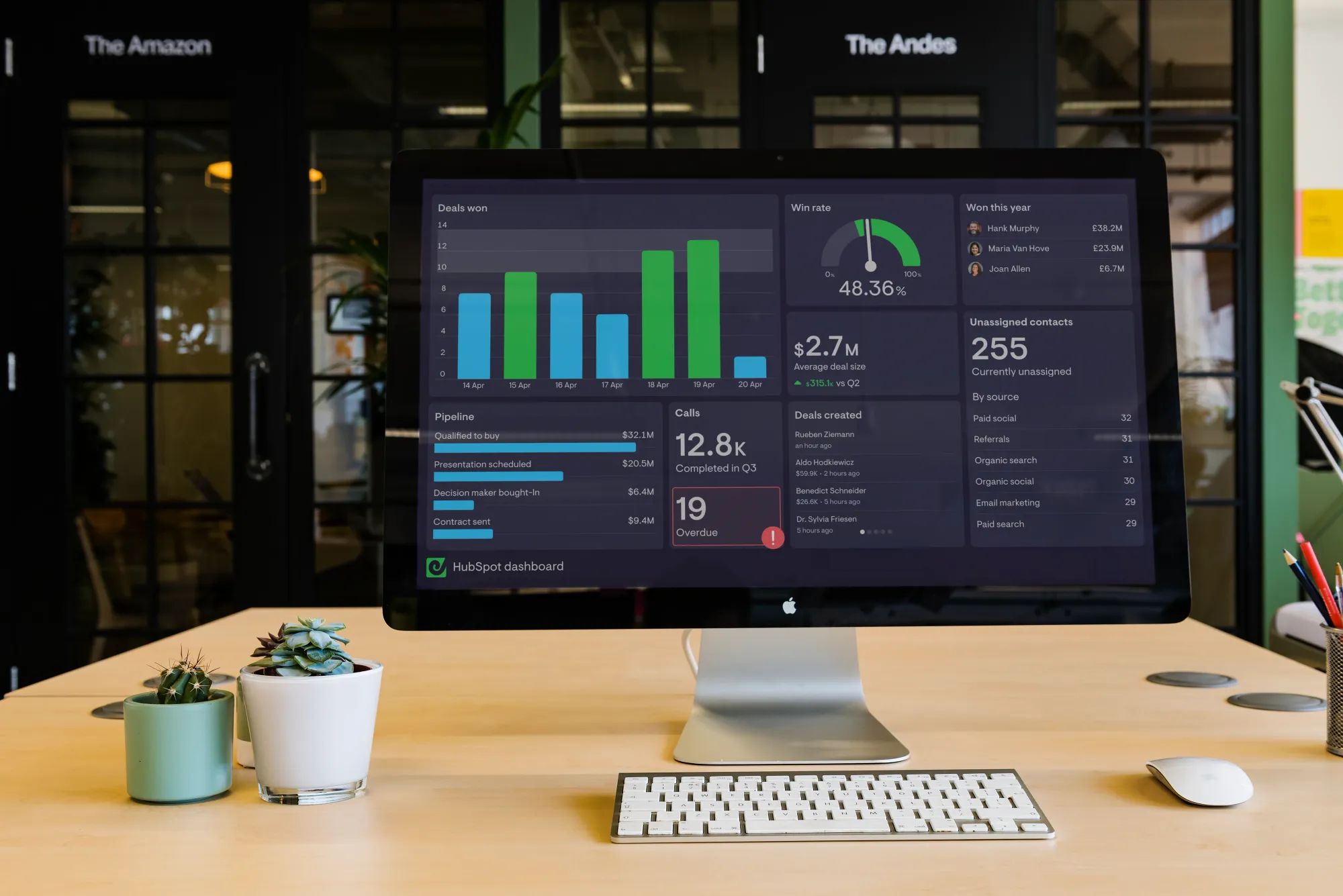
Geckoboard connects to Salesforce, HubSpot, and the other tools your commercial teams run on, and pulls performance ata into a single live dashboard - visible to everyone, updated continuously from the source. Teams stop waiting for reports and start responding to what is actually happening.
The result
When performance is visible, shared, and current, accountability follows naturally. Not because someone is watching - because everyone sees the same picture.
Real-time visibility does not fix a broken commercial strategy. But it gives aligned teams the one thing that makes alignment work in practice: no gap between what is happening and what your team knows about it.

