What we learned from a morning of conversations on real time data, AI and the future of reporting
In the Autumn of 2025 we brought together Zendesk customers, implementation partners and friends of Geckoboard for a focused discussion on how support teams are preparing for 2026. Across the fireside chat, guest talks and informal conversations, one theme kept coming up. Teams are moving away from traditional volume reporting and toward clearer, more meaningful visibility into what really shapes customer experience.
Here is a breakdown of what we covered and the takeaways you can use right away.
Real time visibility with Spotler and Token.io
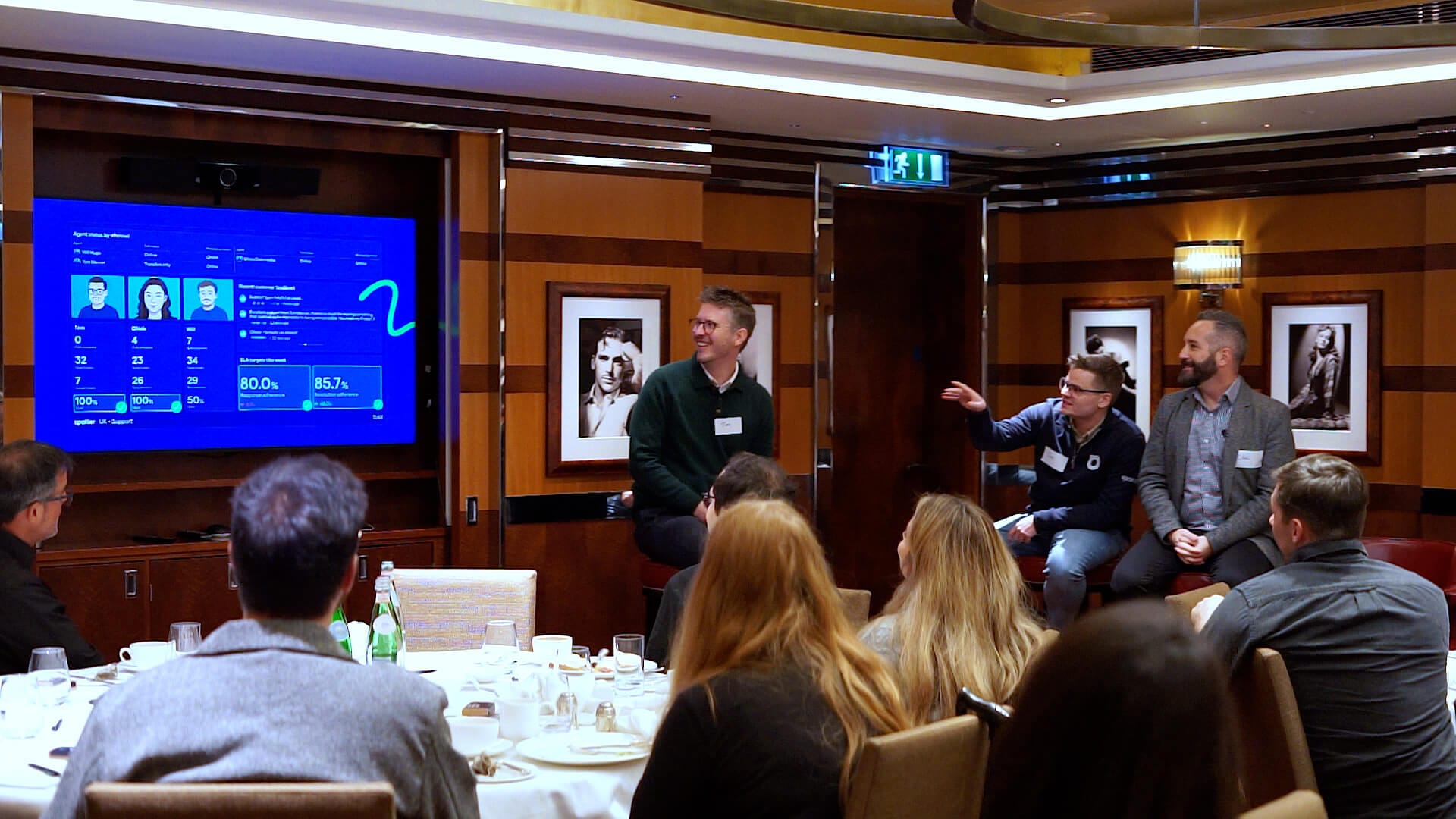
Fireside chat with Tom Mercer (Spotler) and Chris Brogan (Token.io)
Hosted by Tom Randle, CEO at Geckoboard
We opened the morning with a practical discussion on how real time dashboards support fast moving support teams. Both Tom and Chris shared how their operations use live data to stay aligned, hit SLAs and keep teams motivated, especially when working remotely.
How Spotler uses live data
Tom talked about the need for instant visibility across his support operation. His team relies on dashboards to understand what is happening right now, not what happened yesterday. When queues spike or SLAs come under pressure, they can react straight away. Tom also shared how real time data helps keep everyone pulling in the same direction. When priorities shift throughout the day, dashboards make sure the whole team sees the same picture.
How Token.io keeps a distributed team connected
Chris explained that Token.io runs a fully remote support team. Real time visibility has become the glue that holds the operation together. Dashboards show workload distribution, backlog risk and key KPIs in a way that helps the whole team stay aligned without constant check ins. Chris highlighted that this is not just about productivity. It is about enabling people to work with confidence because they understand the state of play at all times.
Key takeaways
- Real time data removes guesswork. Teams respond faster because they see issues as they unfold.
- Visibility is culture. When everyone sees the same data, you reduce friction and improve collaboration.
- Live dashboards help remote teams stay connected and motivated.
How KPIs are changing in an AI driven world
Talk by Eric Nelson, CEO and Co Founder at Stylo
Eric shared findings from a long running study at Stylo on how KPIs are shifting as AI becomes part of everyday support operations. Stylo works closely with Zendesk customers and measures sentiment across frustration, urgency and delight, which gives them a unique view into what actually matters on the front line.
Why traditional KPIs are under pressure
Volume based metrics like ticket count or generic handling time are becoming less meaningful as AI takes over more repetitive work. As Eric put it, AI changes not only how tickets get solved but how teams understand performance. If a bot resolves a growing share of simple tickets, the remaining workload will naturally look more complex. That means teams need a different way to measure success.
The emerging KPI set
Based on Stylo’s research, teams are starting to track:
- Emotion based indicators such as frustration or urgency. These give richer insight into experience than raw CSAT.
- AI effectiveness metrics including AI resolution rate, handoff quality and the difference in outcomes between AI handled and agent handled tickets.
- Customer acceptance of AI which helps teams understand when automated help works and when it creates friction.
Key takeaways
- AI shifts the workload, so KPIs need to reflect the new balance between automation and human support.
- Sentiment rich data helps teams understand the real impact of support, not just output.
- Measuring AI performance directly is essential if you want to scale it in a controlled, customer friendly way.
Moving from volume to value in Zendesk reporting
Talk by Lumi Fagbure, Principal Consultant and Founder at advoCX
Lumi drew on his experience both as a Zendesk implementation partner and a former member of Zendesk’s Professional Services team. His talk focused on the transition from counting activity to measuring value, and how AI driven reporting in Explore unlocks new ways to understand performance.
Rethinking what matters
Lumi opened with a simple question. If AI changes the shape of your workload, what does that mean for the KPIs you rely on today. Many of the standard metrics support teams track are rooted in a world where humans resolve every ticket. Now that is no longer the case.
Four areas teams should start measuring
- Intent volume and accuracy
Intelligent Triage gives teams insight into what customers are asking for and whether tickets are correctly classified. Misclassifications often signal broken processes or unclear workflows. Tracking intents over time helps teams fix upstream issues. - AI agent effectiveness
Lumi outlined the importance of measuring AI resolution rate, quality of handoffs and CSAT comparisons. These metrics show whether AI is genuinely improving the experience or creating more work for agents. - Auto Assist adoption and value
With agent assist tools now available, teams need to track usage, the effect on handling times and the balance between automation and human judgement. Lumi emphasised that good reporting helps teams use AI without losing their human touch. - Self service and deflection insights
Blending Help Center, bot and AI agent data lets teams quantify where customers are solving problems independently. This becomes a foundation for improving knowledge content and refining conversational flows.
Key takeaways
- The shift from volume metrics to value metrics is already underway.
- Intent accuracy, AI adoption and human in the loop metrics give a clearer picture of performance.
- Good reporting helps teams make better decisions about when to automate and when not to.
Themes across the morning

The highlights video captured some of the conversations happening around the room. Three ideas kept coming up.
- Data volume is exploding and teams need better tooling and clearer dashboards to stay on top of it.
- AI is no longer a future topic. It is already reshaping operations and KPIs.
- Everyone is facing similar challenges whether they are implementing AI, adjusting their reporting or figuring out how to support distributed teams.
Final thoughts
Across the morning one point stood out. Support teams are not just adding AI into their workflows. They are rebuilding how they understand performance. Real time data, richer sentiment insights and value based KPIs are becoming the foundations of modern reporting. The conversations from our guests showed that the most successful teams are the ones who stay curious, track the right signals and keep visibility front and centre.
If you would like help bringing real time visibility into your support operation, or want to learn more about how Geckoboard fits into Zendesk reporting for 2026, we would love to talk.
