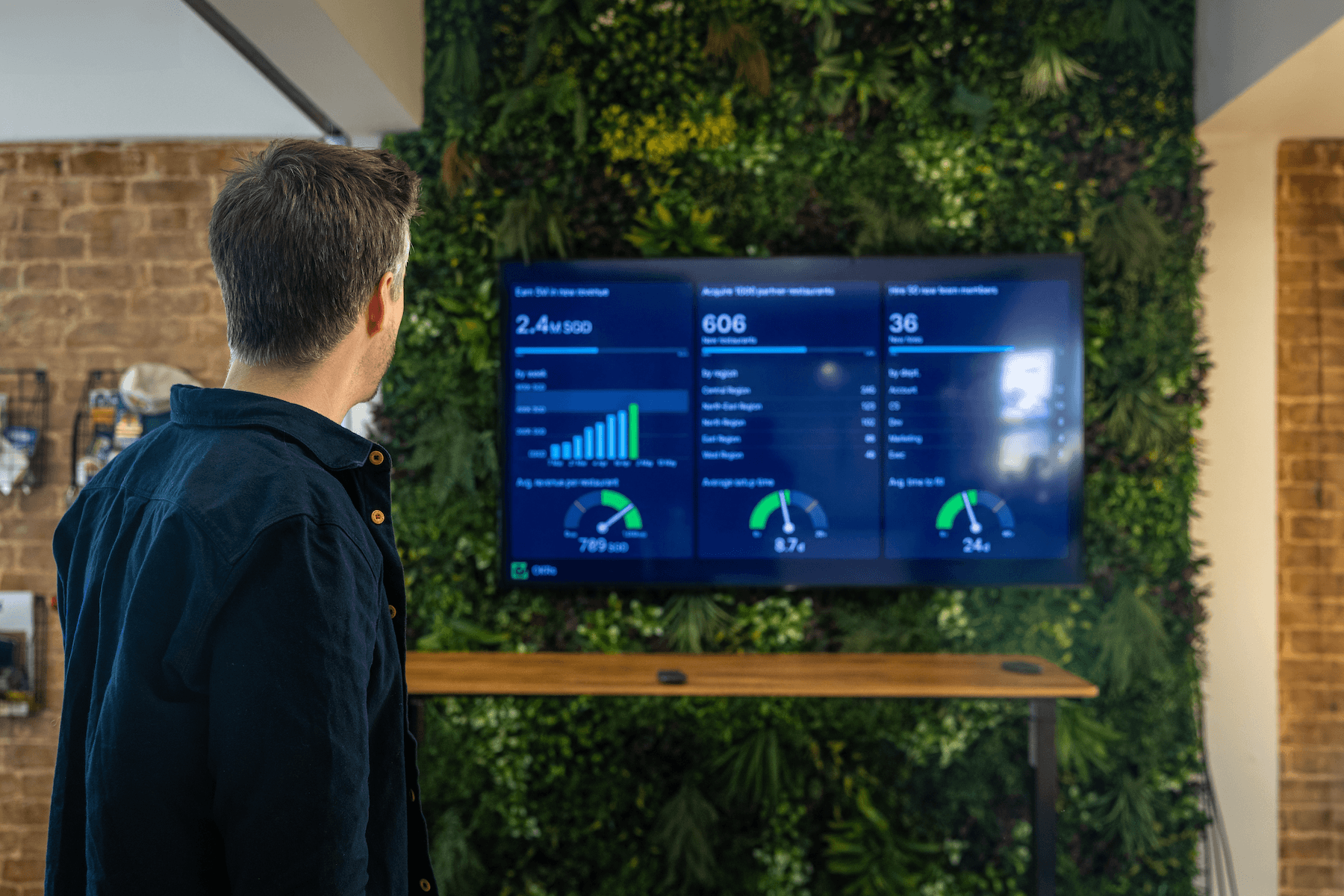
It's a familiar scramble. "The investor needs X report!", "The CEO wants to see how Y is doing!" Some poor soul has to rush around to pull all the requested data and deliver it to senior leadership, pronto. This usually means dropping everything else and spending an afternoon gathering data.
Often by the time the report is viewed, the data is stale and leadership is left with an outdated picture of performance.
Alexandre Naudin, Service Manager at Spash, described this well: "One year ago, my CEO and CPO had no idea about the status of our tickets or our Aircall activity." Not because the data didn't exist but because the way to get it to leadership was to go into their ticketing tool and Aircall, prepare it, and send it.
Most sales and customer service leaders have built something reasonable at their own level. They know their numbers, their teams know their numbers. The problem is the layer above: getting leadership a reliable, current picture of how the business is performing, without it becoming a weekly project that eats into someone's time.
The instinct is to solve this with better reporting, or a more detailed slide deck, or a standing Friday update. Perhaps someone kicks off a BI project but never gets around to it because more pressing things come up.
None of that fixes the underlying problem, access to live data. A CEO isn't going to log into HubSpot or Zendesk and run their own reports. They don't have the context to navigate the tools, and they shouldn't have to. So the data has to be pushed to them, which means it always depends on someone finding the time to do it, running calculations and filters in the exact same way each time, and getting it out before it goes stale.
TL;DR: Build a live dashboard that pulls from the tools your team already uses, share a permanent link with leadership, and set up automated email or Slack snapshots so they’re regularly reminded. No manual reports, no chasing, no admin.
The reporting consistency problem
Are five people looking at the same data going to arrive at the same conclusions? Not always.
When teams invest in regular reporting, there's often a consistency problem: the same data can look very different depending on who compiled it.
Two people pulling pipeline data from the same CRM can return different numbers. One includes deals in negotiation, the other doesn't. One filters by close date, the other by created date.
Neither is wrong, but the CEO who received last month's report from one person and this month's from another has no reliable basis for comparison. The numbers shift not because performance shifted, but because the calculation did.
This is what makes manual reporting structurally unreliable. When a single live view is built once with consistently defined metrics, that problem disappears. Leadership sees the same calculation every time, pulled from the same source, with no room for interpretation to creep in.
What executives need to see
The other mistake is assuming leadership needs everything. In fact, giving them too much information only clouds their picture and creates more questions.
A CEO or investor checking in on the business needs to know three things: are we on track, where are the risks, and is anything broken. Everything else belongs a level down, in the operational layer.
Christopher Ford, Director of Growth at HappyDoc, has built Geckoboard into the stack at three companies. His view on what belongs in front of leadership is precise, the leading indicators that tell you whether the team is on track across the things that matter most.
In HappyDoc's case, that's the sales and marketing SLA. On any given day, Christopher, his leadership team, and their investors can see exactly where things stand against it. Not because someone sent a report around but because the live view is always there.
"We operate on a marketing and sales service level agreement," he told Geckoboard. "The dashboards I have in Geckoboard really cleanly give us a picture on any given day of whether everyone is upholding that agreement and where the cracks are."
That's the right level for executive visibility. The data that tells leadership whether action needs to be taken or whether everything is on course.
Making performance data accessible to leadership
Most of the data leadership needs already exists somewhere. It could be in HubSpot, or Zendesk, or another CRM. The problem is that it's accessible to the people who operate those tools daily, and largely inaccessible to everyone else.
Giving a CEO or board member a seat in Zendesk isn't the answer. They don't have the context to navigate it, and they don't have the time. The tool is built for the people running support, not for the person who needs to know, in 30 seconds, whether the team is performing.
Kieran Boyce, General Manager of Operations at Woolworths MarketPlus, described it well: "The information was critical, but it was stuck in Zendesk. We needed real-time insights that anyone could see, from agents to executives."
Just because data is available within the tools used by a business, it doesn't mean it's accessible to those who need only key pieces of information.
Closing that gap requires something separate, a view that's built specifically for the leadership audience that needs it. It should always be live and totally accessible, no seats or detailed report navigation required.
How to build an executive dashboard your CEO will use
Geckoboard is built for exactly this problem, giving leadership a live view of operational performance without anyone having to request or build a report. It connects to the tools teams already use, including HubSpot, Zendesk, Salesforce, and more, and surfaces the metrics that matter in a single, real-time view that anyone can access.
What this approach looks like: working with the senior leadership team, identify the five to eight metrics they need to see. Build a view that surfaces exactly those, pulled live from whatever tools the team already uses. Make sure anyone in leadership can access it without needing input from others.
The view doesn't need to be complicated. Geckoboard customers who do this well keep it deliberately simple, one screen, a handful of numbers, clear trend lines. The goal isn't to show everything. It's to keep leadership on top of what's happening and able to answer most of their own questions without creating work for anyone else.
Once the dashboard is built, Geckoboard lets teams take it one step further: leadership can be sent automated email, Slack, or Microsoft Teams snapshots of the dashboard on a schedule they choose. They get a live link they can check at any time, plus a gentle nudge to the data when it matters most. No one has to remember to send anything.
At HappyDoc, that view includes investors. Christopher's board can check performance without a meeting, a prepared deck, or a message to his team. The reporting overhead that used to sit between leadership and the data has been removed entirely.
Start a free Geckoboard trial and have a live dashboard in front of your leadership team today.
What changes when leadership consistently view live data
Firstly, there's a huge reduction in manual reporting hours. The person responsible for reporting within the team stops building leadership slide decks or reports and starts spending that time on the work that matters.
Secondly, and more importantly, leadership is able to focus their attention on strategy that'll grow the business. They become more curious about what's driving things forward and what's holding things back. They talk to teams about how they can improve the metrics that they're so familiar with.
Executive visibility isn't a luxury. It's what allows leadership to do their job properly. The teams that build it well aren't just saving reporting time, they're creating the conditions for better decisions.
Sam Gane is Senior Customer Marketing Manager at Geckoboard. She's spent years talking to customers and turning their stories into content for a community of likeminded leaders.

