
Ecommerce dashboard examples
Real-world dashboards used by online sellers to track store performance, manage orders, and optimise every stage of the buyer journey.
Ecommerce KPI dashboard
Ecommerce KPI dashboards give online sellers an overview of store performance against key metrics. Successful ecommerce businesses need to optimise every stage of the customer journey, from first touch to purchase. Ecommerce dashboards allow online sellers to track their progress and quickly respond to any changes.
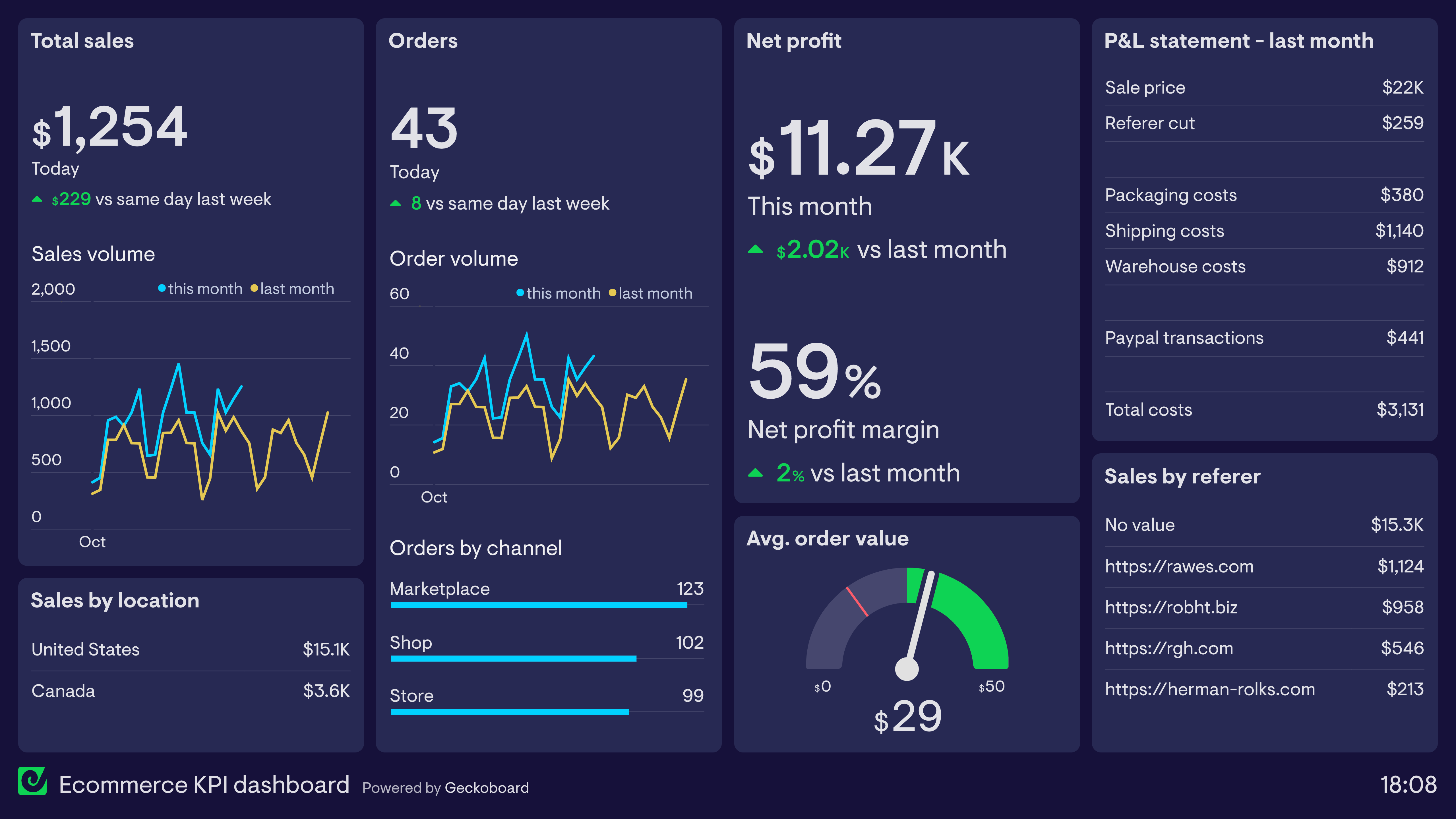
Ecommerce KPI dashboard
This dashboard takes many of its metrics directly from Shopify, which the store owner uses as their primary ecommerce platform. Not only is it important for the seller to track total revenue and orders, but also health metrics such as Average Order Value and Profit Margin. This seller has also included a Profit & Loss statement, detailing various business costs incurred last month. These metrics are not tracked in Shopify, but by using a data dashboard they can display these important metrics alongside the Shopify data, even though they come from different sources.
Build a dashboard like this with Geckoboard
Try freeShopify dashboards
Shopify dashboards allow online sellers to view their most important store data in one place. When managing an ecommerce store it’s common to be working with Shopify alongside other tools such as Google Analytics, Facebook Ads, and Klaviyo. You may also manage multiple Shopify stores, which complicates your reporting. By bringing online store metrics from Shopify together into a KPI dashboard you’ll be able to spot issues as they happen and save time spent reporting.
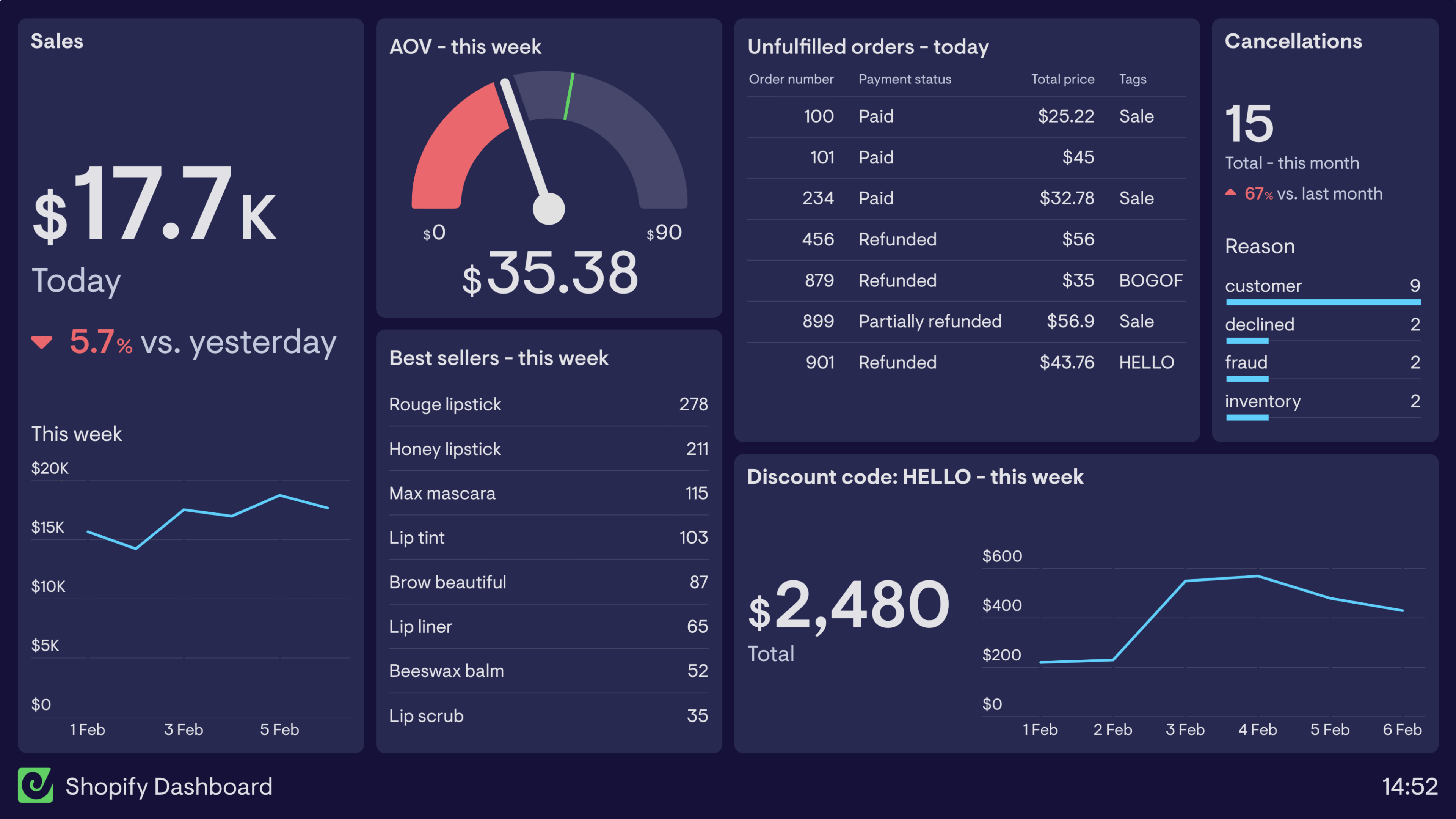
Shopify dashboard
This dashboard brings key data from a Shopify store together into one place. It gives the store owner an overview of sales, best selling products, Average Order Value, and even breaks out sales around a specific discount code. To help stay on top of potential issues, this dashboard also includes details of the unfulfilled orders from today alongside cancellations broken down into categories.
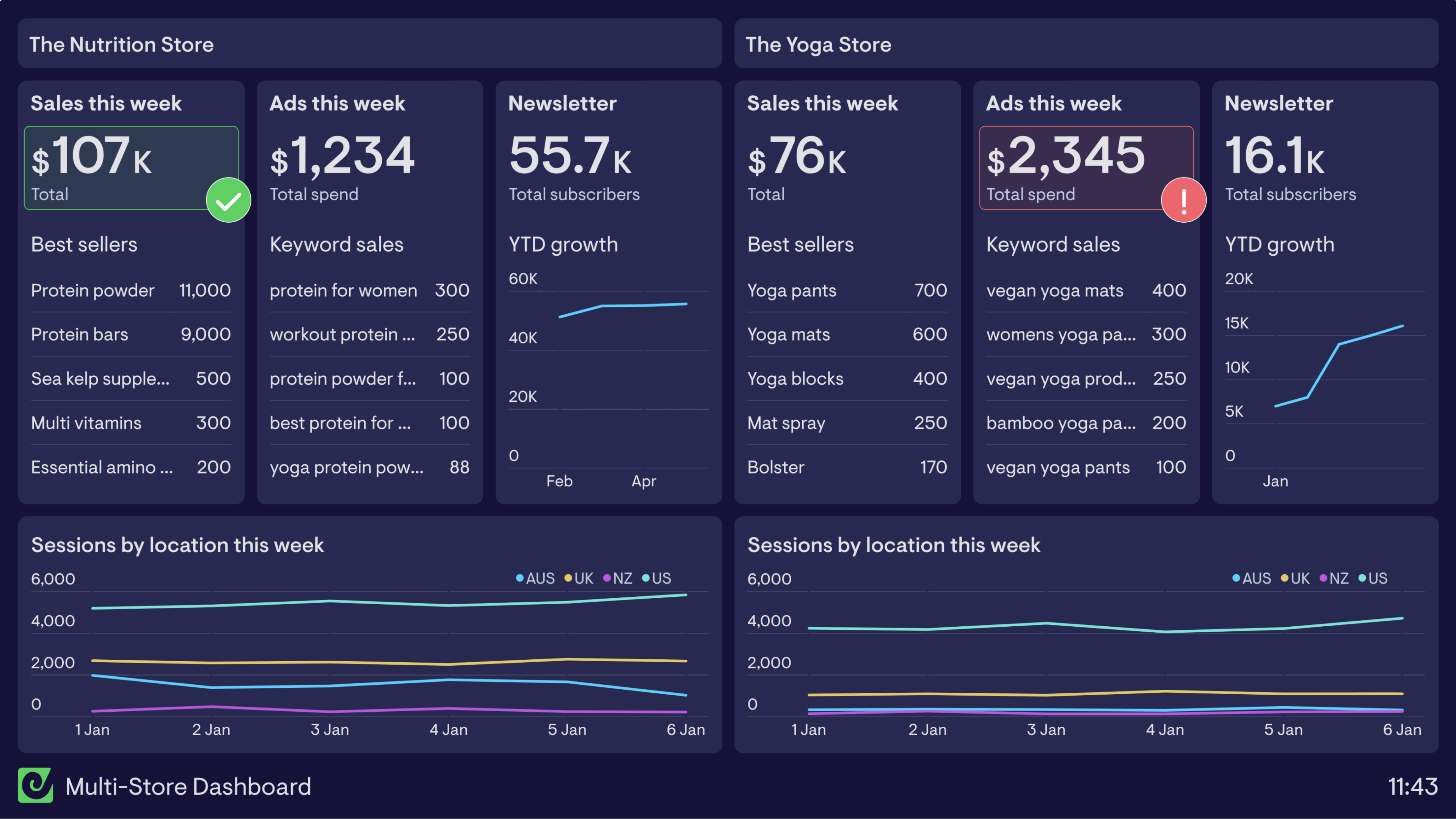
Multiple stores dashboard
There are many businesses who run multiple Shopify stores and need an overview of how each website is performing. This dashboard brings key data from two different stores together into one place, rather than having to switch between stores and reports within Shopify. Using a combination of data from Shopify, Google Ads, Google Analytics, and Mailchimp the team are able to get a real-time overview of how two stores are performing.
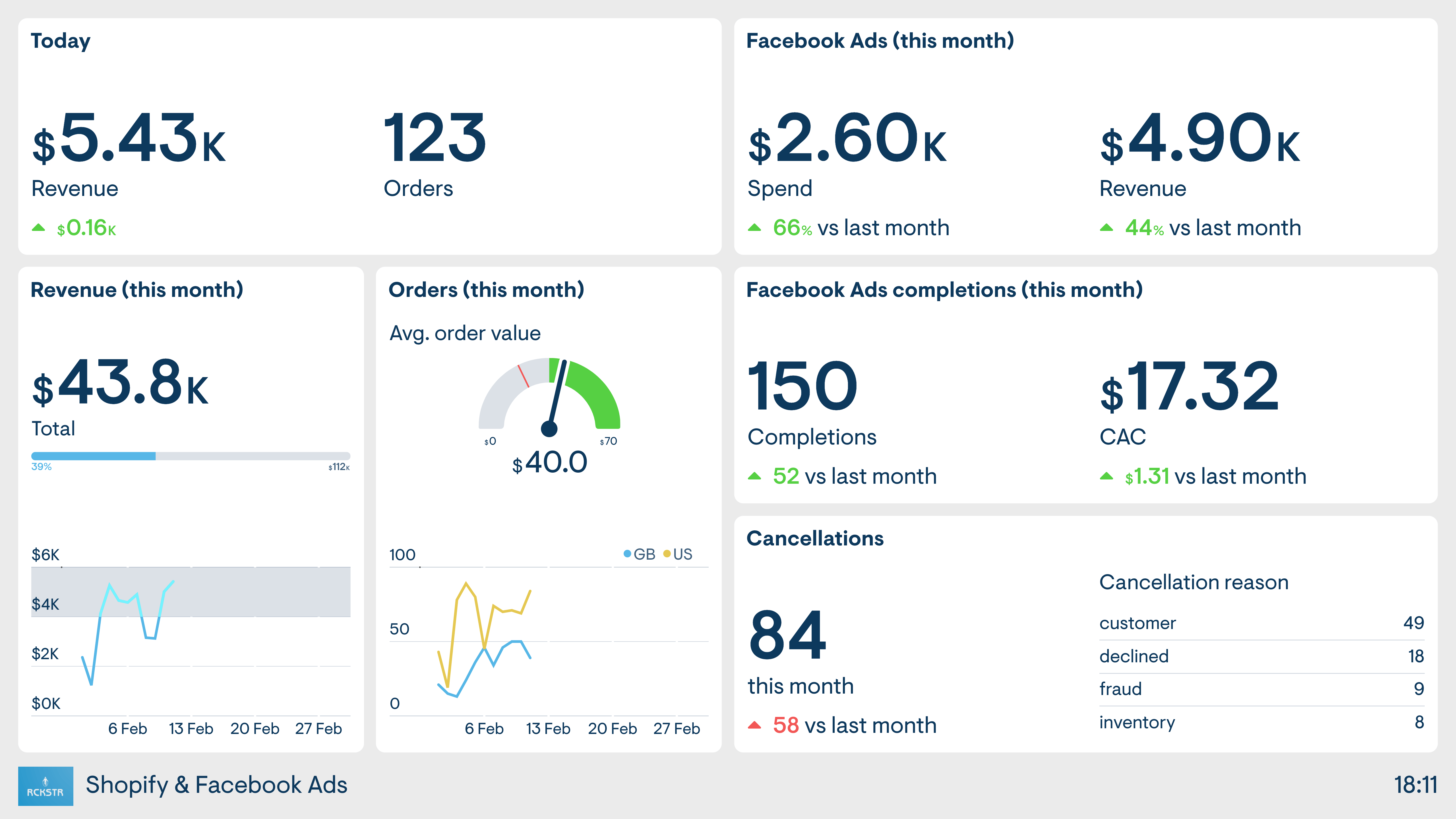
Shopify and Facebook Ads dashboard
This seller’s ecommerce business has a strong focus on Facebook Ads as the driver of new sales. This dashboard takes data from both the online store (Shopify) and Facebook, so the seller has a clear view of the performance of both platforms. Being able to see ad spend alongside revenue in one place makes it easy to understand return on ad spend and identify when campaigns need adjusting.
Build dashboards like these with Geckoboard
Try freeEcommerce marketing dashboard
Ecommerce marketing dashboards allow Marketing Managers to track the success of their campaigns for online stores. The content of these dashboards can vary depending on the types of campaigns running and the focus of the marketing team. The main aim is to bring together key metrics from across multiple platforms and, in some cases multiple brands, to give the Marketing Manager a complete overview of performance in one place.
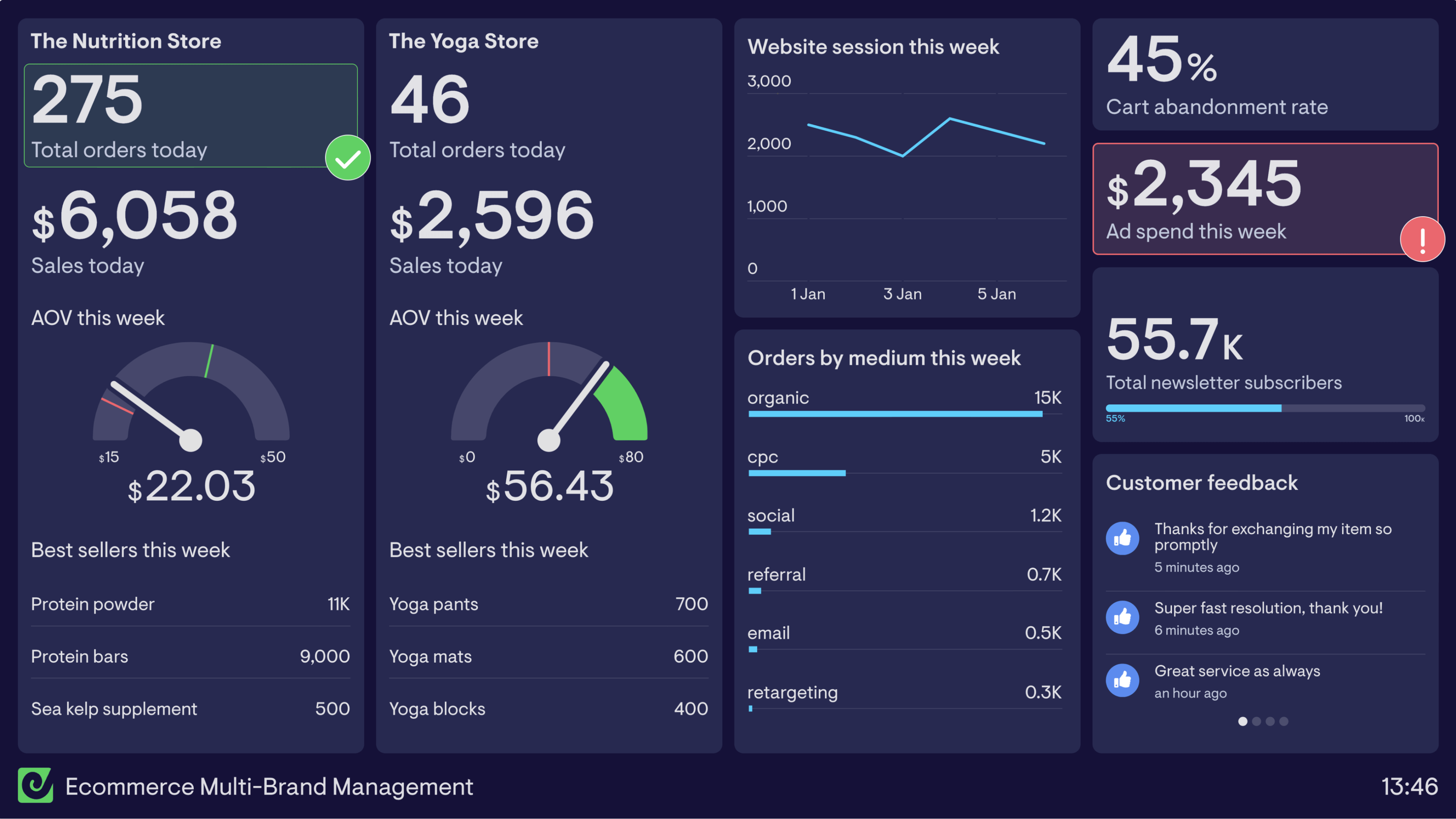
Multiple brand management dashboard
For businesses managing multiple brands, this dashboard highlights how you can share key sales information for multiple online stores alongside other important data from Google Ads, Google Analytics, Mailchimp, and Zendesk Support. It gives an overview of real-time data to ensure your online brands are running as expected on a day-to-day basis.
Build a dashboard like this with Geckoboard
Try freeBuild your own ecommerce dashboard
Connect Shopify, Google Analytics, and your other data sources to create a live ecommerce dashboard in minutes.
Start free trial