Call center dashboard examples
A call center dashboard shows live queue metrics — calls waiting, wait time, handling time, CSAT — on a shared screen so the team can react to changes as they happen. When a queue builds or a metric drops, everyone in the room sees it at the same time.
Live call center dashboard
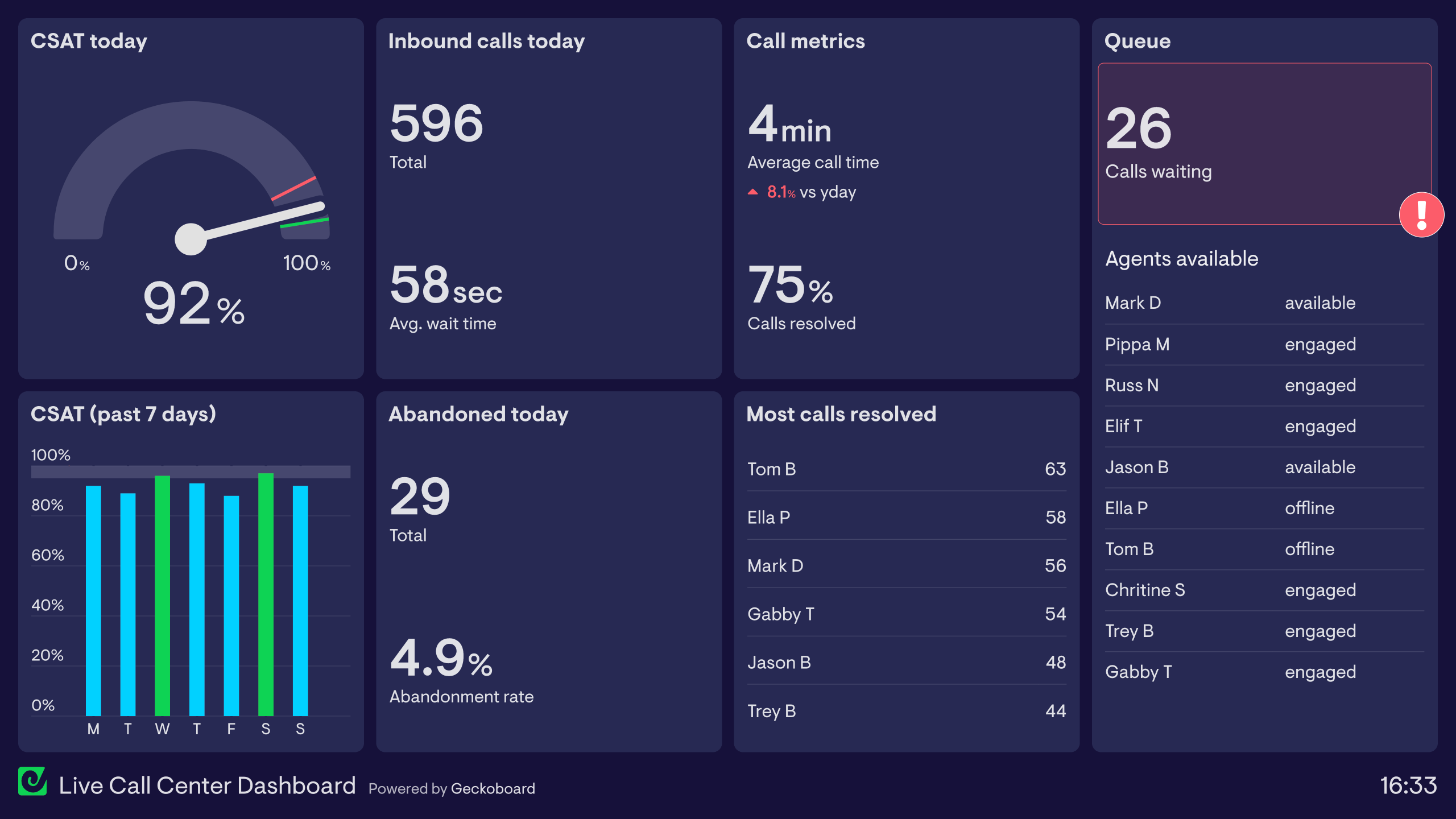
This dashboard is primarily focused on live data, which shows how the team is performing on that day. On the left, we can see the team's Customer Satisfaction score (CSAT) today, visualized alongside their daily CSAT scores for the previous seven days. Their target is to achieve a CSAT score of above 95%, and this is highlighted in green when they do. Positive feedback loops like this can focus performance and improve motivation; If you’re thinking about gamifying a call center, this guide to gamification for support and sales teams explains how to do it with live KPIs (not gimmicks).
Next, we have information on the volume of calls that day, as well as Average Wait Time, and Abandonment Rate. Here the team can see if they are keeping up with customer demand. If they weren’t, they would expect to see the Wait Time and Abandonment Rate increase throughout the day. This focus on responding to call volume is balanced by a metric that shows the percentage of successful call resolutions, including a leaderboard for the most call resolutions by agent.
Finally, on the right, we can see the number of calls waiting right now, as well as the live status of agents. This alerts the team when they are experiencing a high volume of calls so they can react quickly.
Call center KPIs dashboard
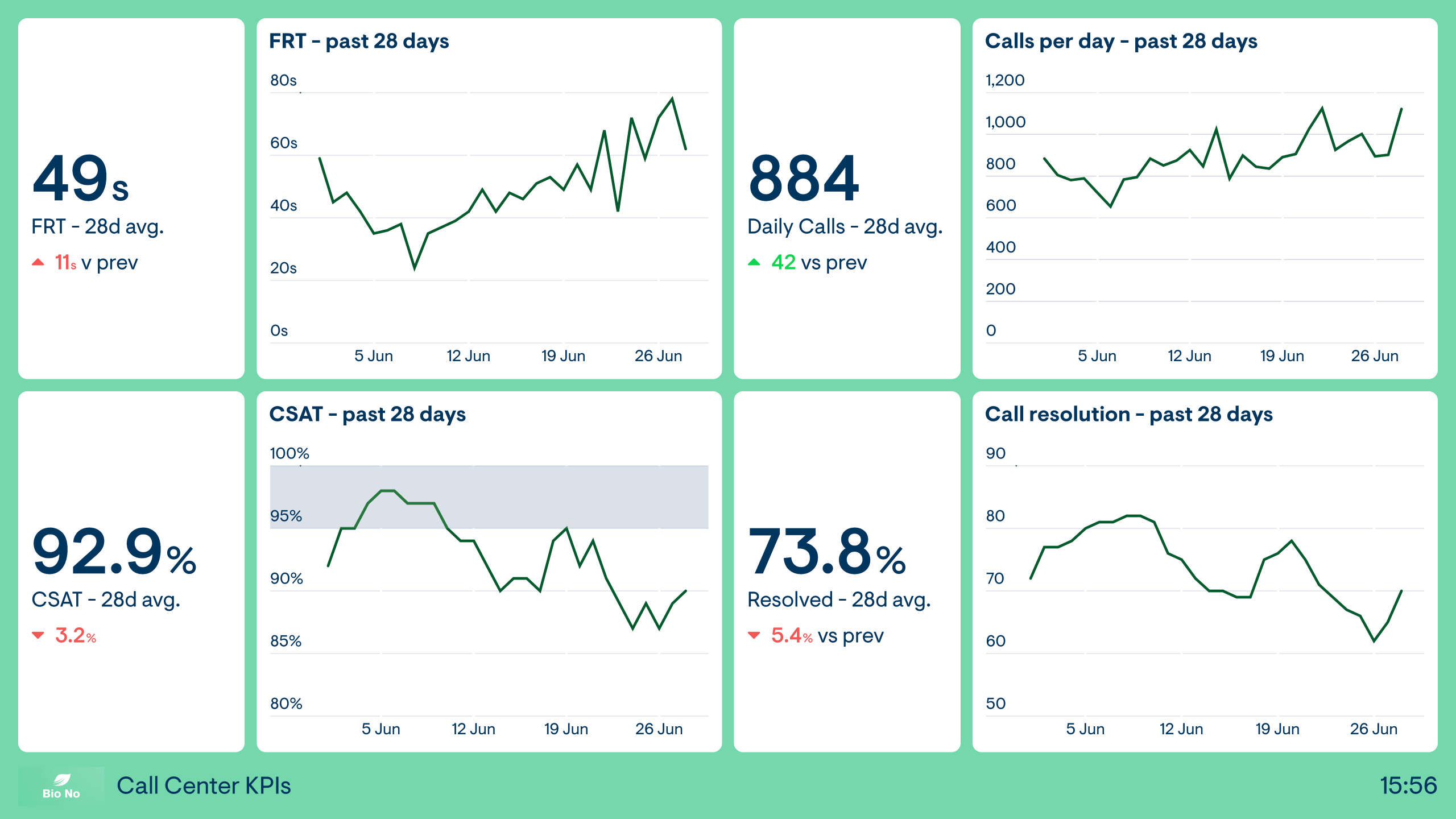
This call center dashboard is less focused on performance that day, and more focused on the overall KPI trends for the month. This broader perspective allows teams and team leaders to put their key metrics in context, so they can improve performance in the long term. It also helps them understand how call volume is changing so they can better allocate resources.
In particular, this dashboard is visualizing four KPIs: First Response Time (FRT), the average time taken to respond to each call; Customer Satisfaction (CSAT) taken from a short post-call survey; Calls per Day; and Call Resolution, which is the percentage of calls successfully resolved.
Browse other popular examples
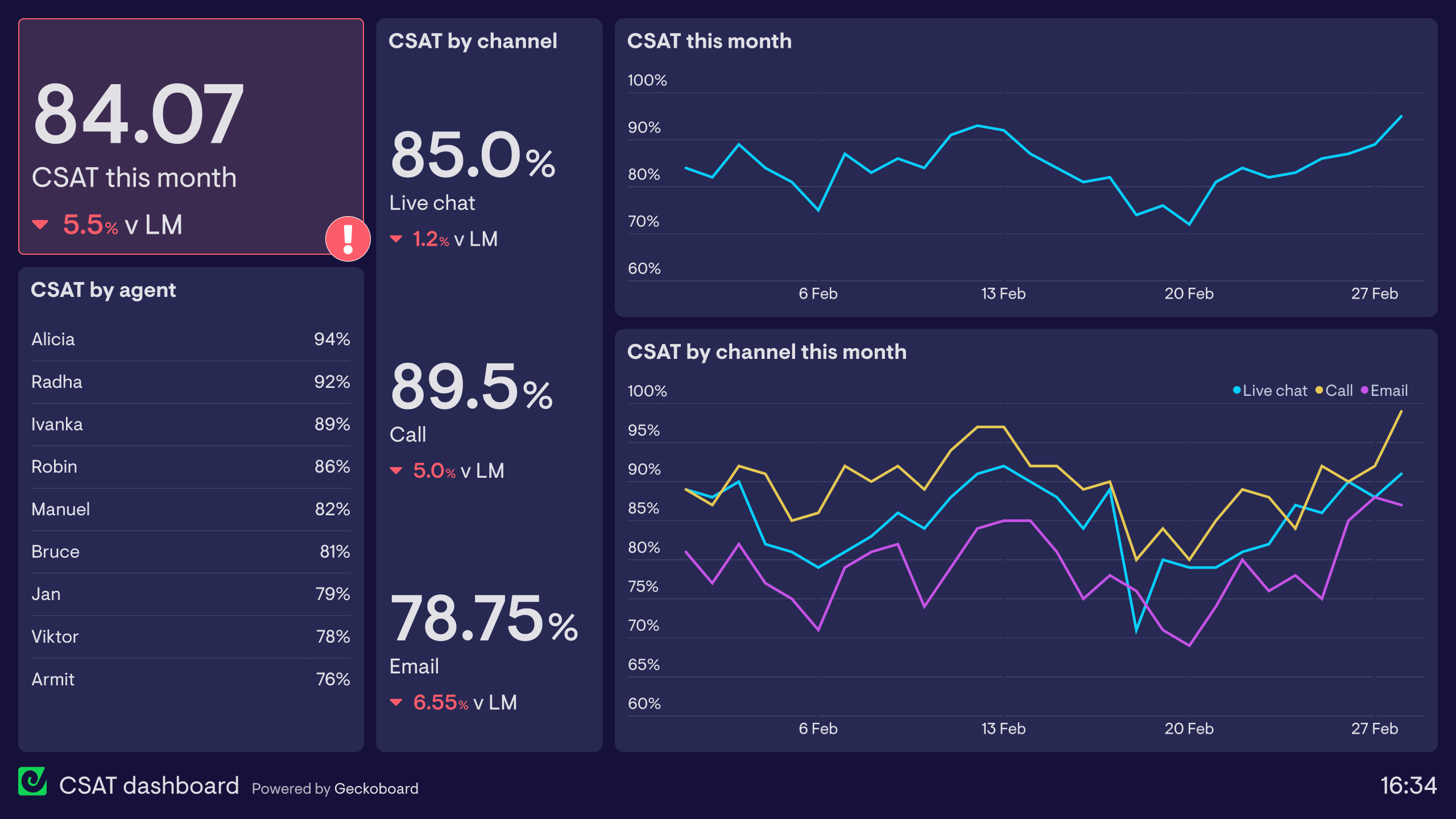
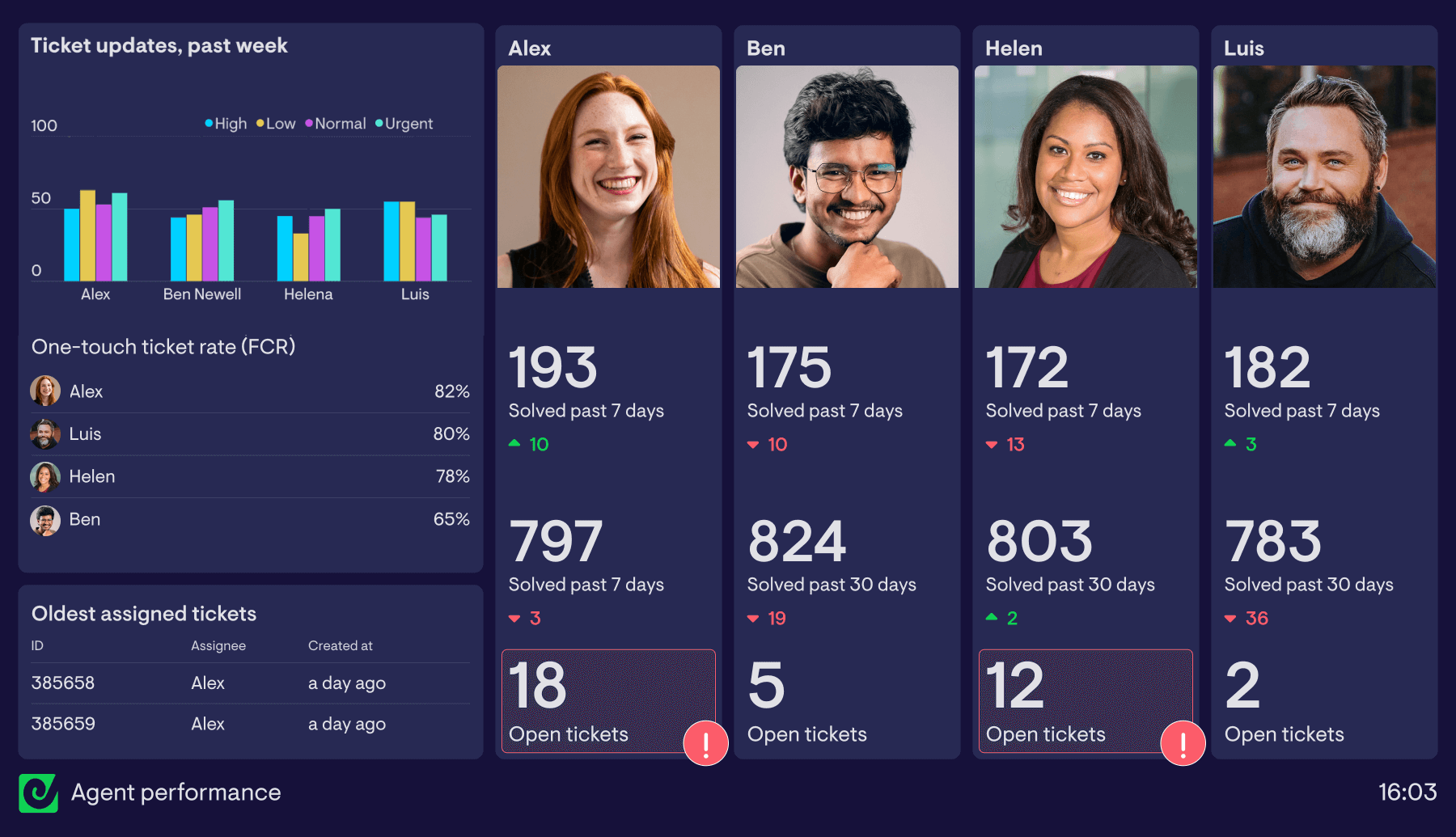
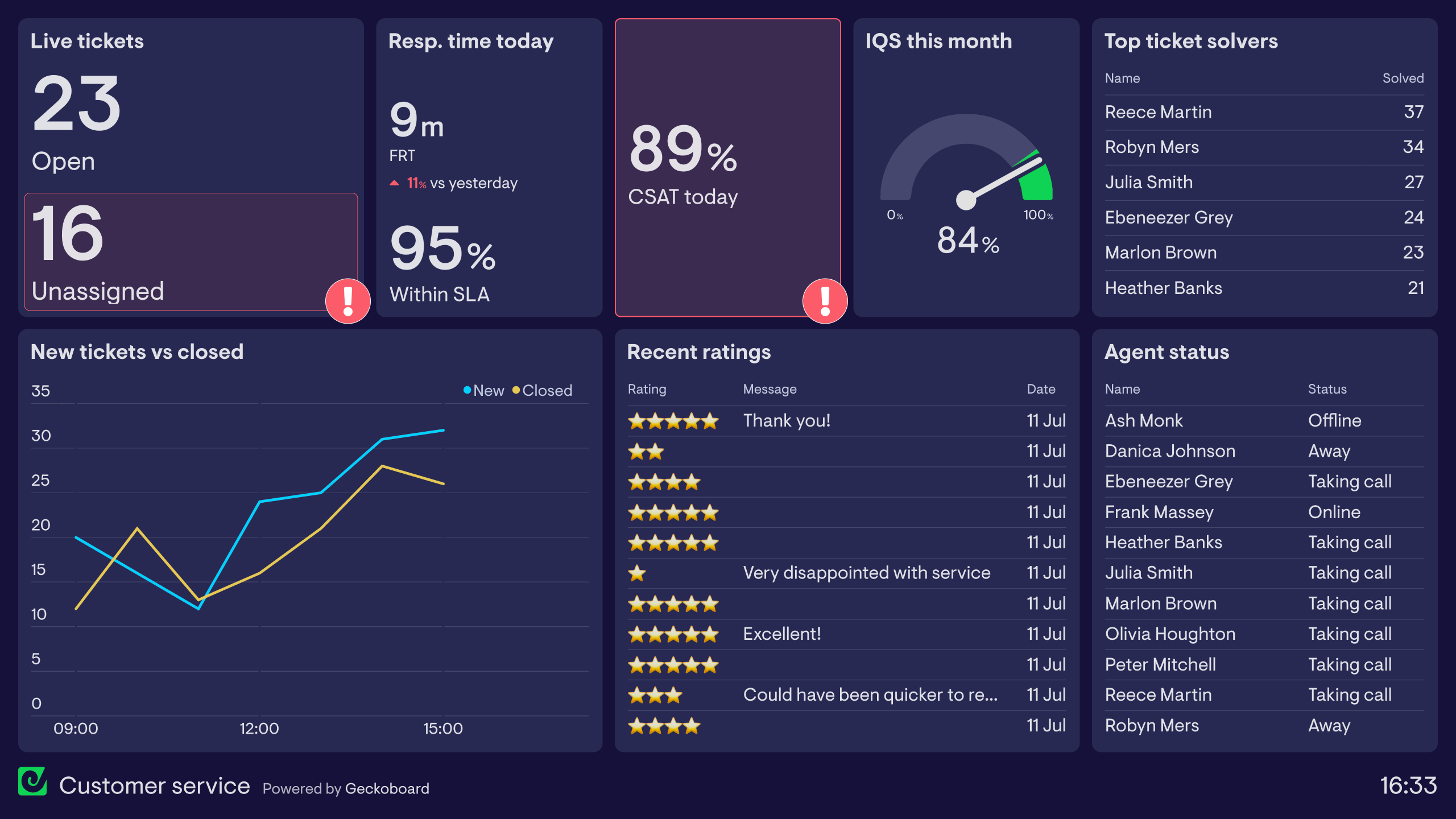
A call center dashboard gives supervisors and team leads a live view of call queue status, agent performance, and service level metrics. It's designed for display on a TV screen or shared monitor, so the whole team can see what's happening and respond to volume changes or SLA breaches in real time.
Geckoboard is a live dashboard tool built for teams that need to see what's happening right now. It connects to your call center software and other tools you use, pulling live queue metrics from multiple sources onto a shared screen — so managers and agents are always looking at the same data at the same time.
Common metrics include calls waiting, average wait time, average handle time, missed calls, calls answered, first-call resolution, and agent availability. SLA compliance and abandonment rate are also tracked in most call center environments.
Building a custom call center dashboard is straightforward with Geckoboard's dashboard builder. Connect Aircall, Zendesk Support, Freshdesk, or RingCentral depending on your telephony and ticketing stack, then pick your metrics and build the view you need. Share with your team as a TV dashboard, shared link, or scheduled snapshot. Start a free trial or learn more about how Geckoboard works.
Use it to track customer service performance live so supervisors can act on queue pressure before wait times spike. Display it on the call center floor to keep agents aware of their own metrics and how the team is tracking against daily targets.