What is a Stylo Scores dashboard?
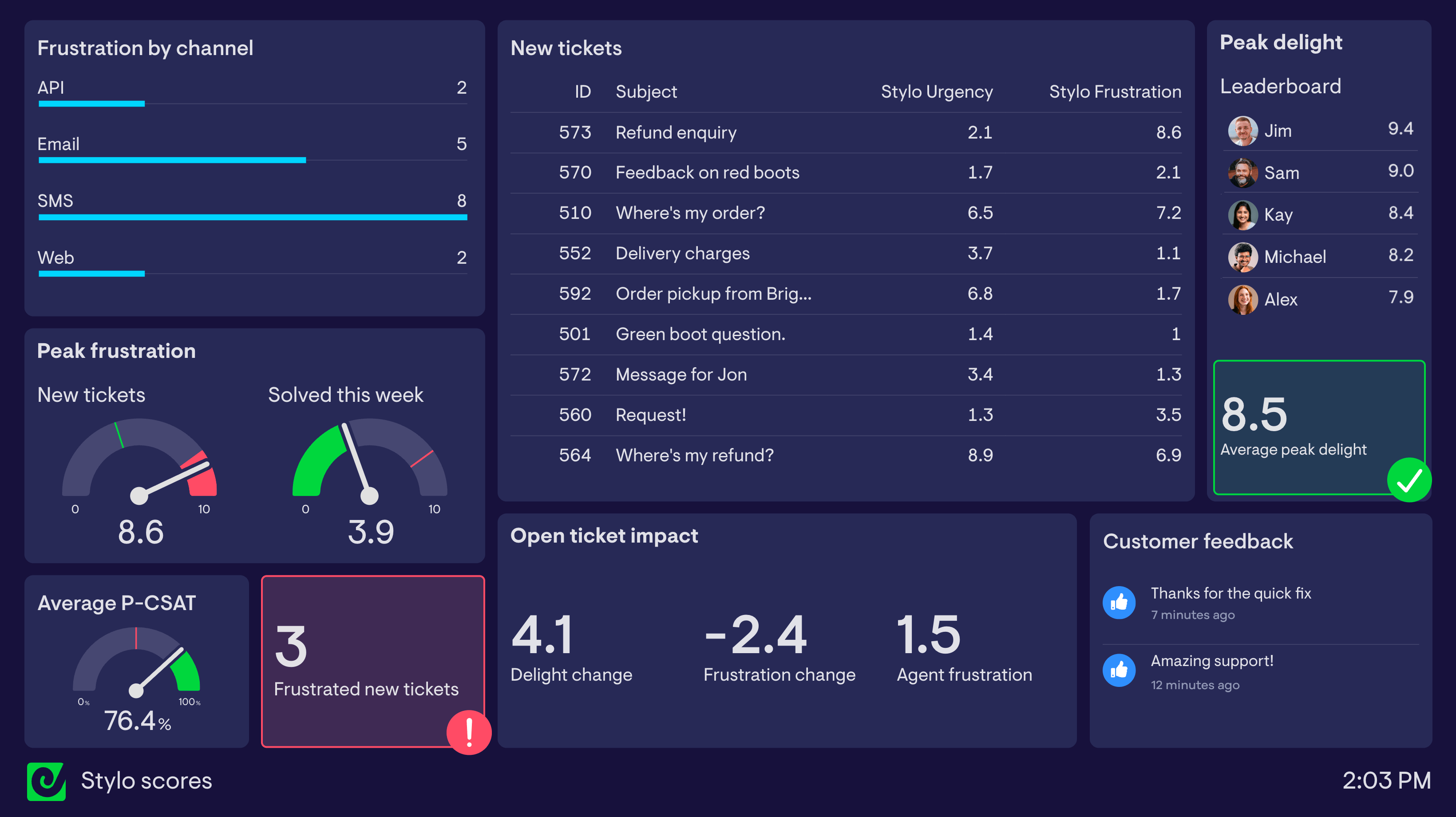
A Stylo Scores dashboard brings customer sentiment and urgency into the same real-time view as your Zendesk queue metrics.
Instead of waiting for CSAT to land (or relying on gut feel), you can see which conversations are trending frustrated, which are time-sensitive, and where your team might need support — while tickets are still open.
This example dashboard is built for support leads and team managers who want an early warning system for customer risk.
It combines:
- Frustration by channel to spot where issues are coming from (email, web, SMS, API)
- A live new ticket list with Stylo urgency and Stylo frustration scores so you can triage the right work first
- Peak delight and peak frustration to understand how customers (and agents) are experiencing support today
- Average predicted CSAT (P-CSAT) alongside a count of frustrated new tickets
- An "open ticket impact" summary to track whether delight / frustration is improving as tickets progress
- Recent customer feedback to keep the human context close to the metrics
A practical note: AI signals are most useful when they’re treated as directional. Use the scores to prioritise and investigate, then pair them with what you already trust (SLA, backlog, first response time, notes from the team).
Want to try it? Stylo writes these scores back to Zendesk as custom ticket fields, so you can surface them in Geckoboard using the Zendesk integration. There’s also a 3-month free offer for Stylo + Geckoboard - details and how to claim it are here.
Stylo Scores dashboard
Track customer sentiment and urgency in real-time alongside your Zendesk queue metrics. This dashboard combines frustration by channel, live ticket lists with Stylo Scores, peak delight and frustration metrics, predicted CSAT, and recent customer feedback to give support teams an early warning system for customer risk.
Focus area
Customer sentiment, urgency, and predicted CSAT in Zendesk
Who looks at it?
Support leads, Support Ops, team managers, and agents during the day
How often?
Throughout the day (especially during peak volume, incidents, or releases)